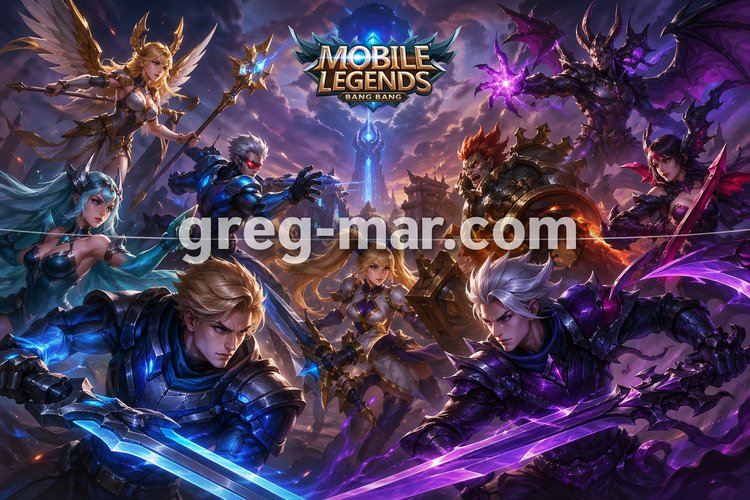
greg-mar.com – Mobile Legends has become one of the most influential mobile MOBA games because it offers players a wide variety of heroes, strategies, and gameplay experiences. Every match presents unique challenges, and each hero contributes differently to the outcome of the game. While many newcomers focus on obtaining kills and dealing damage, experienced players understand that every hero has a specific purpose within the team’s overall strategy.
Heroes in Mobile Legends are designed around distinct roles that determine how they interact with teammates and opponents. Some heroes excel at initiating fights, while others specialize in supporting allies, securing objectives, or eliminating vulnerable targets. Understanding these responsibilities is the first step toward becoming a more effective player.
The complexity of Mobile Legends comes from the interaction between hero abilities, map objectives, item choices, and team coordination. A hero that dominates one situation may struggle in another, which is why adaptability and game knowledge are just as important as mechanical skill. Players who learn how heroes function within the larger context of a match gain a significant advantage over those who focus solely on individual performance.
Understanding Hero Roles and Their Responsibilities
Tank heroes are often the backbone of a successful team composition. Heroes such as Tigreal, Atlas, Khufra, and Akai are built to withstand large amounts of damage while creating opportunities for their teammates. Their durability allows them to lead engagements and absorb attacks that would otherwise threaten more fragile allies.
The responsibilities of a tank extend beyond simply surviving. Tanks must control vision, scout dangerous areas, and position themselves in ways that protect teammates from enemy attacks. A skilled tank player constantly evaluates the battlefield, identifying opportunities to initiate fights or disengage when necessary.
One of the most important aspects of tank gameplay is crowd control. Abilities that stun, knock up, or immobilize enemies can completely change the outcome of a teamfight. A well-executed initiation often creates the opening needed for damage dealers to eliminate key targets.
Because tanks frequently place themselves in dangerous situations, they must also possess excellent map awareness. Understanding enemy positions and predicting potential threats allows tanks to make informed decisions that benefit the entire team.
Fighters as Flexible Warriors for Every Situation
Fighter heroes occupy a unique position within Mobile Legends because they combine offensive power with respectable durability. Heroes such as Yu Zhong, Terizla, Lapu-Lapu, and Thamuz can deal consistent damage while surviving longer than most damage-focused roles.
Most fighters begin their journey in the EXP lane, where they gain levels quickly and prepare for larger engagements later in the game. Their ability to duel opponents and sustain themselves makes them valuable assets during both laning and teamfighting phases.
What makes fighters particularly effective is their adaptability. Depending on the match situation, they can act as initiators, secondary frontliners, split pushers, or objective defenders. This versatility gives teams additional strategic options and makes fighters difficult to predict.
Successful fighter players understand when to apply pressure and when to retreat. Overcommitting can result in unnecessary deaths, while excessive caution may reduce their impact on the game. Balancing aggression and patience is essential for maximizing a fighter’s effectiveness.
Assassins as Specialists in Precision Elimination
Assassin heroes are designed to eliminate priority targets quickly and efficiently. Characters such as Ling, Hayabusa, Gusion, and Nolan excel at finding vulnerable enemies and removing them before they can contribute to teamfights.
Unlike tanks and fighters, assassins rely heavily on mobility and timing rather than durability. Their success often depends on their ability to navigate the battlefield unseen and strike at the perfect moment. Entering a fight too early can expose them to crowd control and burst damage, while waiting too long may allow enemies to escape.
Map awareness is particularly important for assassin players. Identifying isolated targets, predicting enemy movements, and understanding objective timings are all critical components of effective assassin gameplay.
When used correctly, assassins create immense pressure across the map. Enemy marksmen and mages must constantly adjust their positioning, knowing that a single mistake could lead to immediate elimination.
How Heroes Influence Different Stages of the Match
The early game is a crucial period where heroes begin building the foundation for future success. During this stage, players focus on farming, securing resources, and maintaining lane control.
Heroes with strong early-game capabilities often attempt to create pressure through aggressive trades and rotations. Meanwhile, scaling heroes prioritize resource collection and survival until they reach important item milestones.
Wave management plays a significant role during the early game. Properly controlling minion waves can create opportunities for objectives, deny resources to opponents, and establish favorable positions for future engagements.
Although kills can provide valuable advantages, efficient farming and objective control are often more important for long-term success.
Mid Game and the Importance of Objective Control
As the match progresses into the mid game, objectives become increasingly important. Teams begin contesting Turtle, outer turrets, and jungle resources while coordinating rotations across multiple lanes.
Heroes with strong crowd control and mobility become especially valuable during this phase because they can influence fights around objectives. Tanks initiate engagements, fighters provide sustained pressure, and assassins look for opportunities to eliminate vulnerable targets.
Successful teams understand that objectives often provide more value than individual kills. Securing a Turtle or destroying a turret creates lasting advantages that can influence the remainder of the match.
Communication and coordination are essential during the mid game. Teams that rotate efficiently and respond quickly to changing situations usually gain control of the map and dictate the pace of play.
Late Game and High-Stakes Teamfights
Late-game scenarios are often the most intense moments in Mobile Legends. Most heroes have completed their core items, meaning that damage output is significantly higher than earlier phases.
At this stage, positioning becomes one of the most important skills in the game. A single mistake can lead to elimination and create an opening for the opposing team to secure major objectives or even end the match.
Marksmen and mages typically become the primary sources of damage during late-game fights. Their ability to eliminate enemies quickly makes them invaluable, but it also places a target on their backs. Tanks and supports must work together to ensure these heroes remain safe and effective.
Patience is often rewarded during the late game. Teams that wait for favorable opportunities and avoid unnecessary risks are more likely to succeed in decisive engagements.
Understanding Synergy Between Heroes
Hero synergy is one of the most important concepts in Mobile Legends. Certain heroes complement each other exceptionally well, creating combinations that are more powerful than the sum of their individual abilities.
For example, heroes with strong crowd control can create ideal conditions for burst damage dealers. Likewise, supportive heroes can enhance the survivability and effectiveness of teammates who rely on positioning.
Learning these interactions allows players to draft stronger team compositions and execute coordinated strategies more effectively.
Adapting Item Builds to Match Conditions
Itemization is another critical aspect of hero mastery. Following the same build every match may not always be effective because different opponents require different solutions.
Players should learn how to adjust their builds based on enemy threats, team composition, and game progression. Defensive items may be necessary against heavy burst damage, while offensive options can help capitalize on an existing advantage.
The ability to adapt item choices demonstrates a deeper understanding of both the hero and the game itself.
Developing Consistent Decision-Making
Mechanical skill can win individual fights, but decision-making wins matches. Knowing when to engage, retreat, rotate, or prioritize objectives separates strong players from average ones.
Good decisions often involve evaluating risk and reward. Chasing a low-health enemy may seem tempting, but abandoning an objective or exposing teammates to danger can create larger problems.
Players who consistently make smart decisions contribute more to their team and achieve better results over time.
Conclusion Mobile Legends Heroes and the Art of Mastering Every Role on the Battlefield
Mobile Legends heroes provide a rich and diverse gameplay experience that rewards strategic thinking, teamwork, and adaptability. Each role contributes something unique to the battlefield, from tanks that protect allies to assassins that eliminate key threats.
Understanding hero responsibilities, mastering different phases of the match, and adapting to changing situations are all essential components of long-term improvement. Success is rarely determined by mechanics alone; it is the result of combining skill, knowledge, and effective decision-making.
As players continue to explore different heroes and strategies, they gain a deeper appreciation for the complexity of Mobile Legends. Those who invest time in understanding how heroes interact within the larger framework of the game will be better prepared to overcome challenges, support their teammates, and achieve consistent victories on the battlefield.